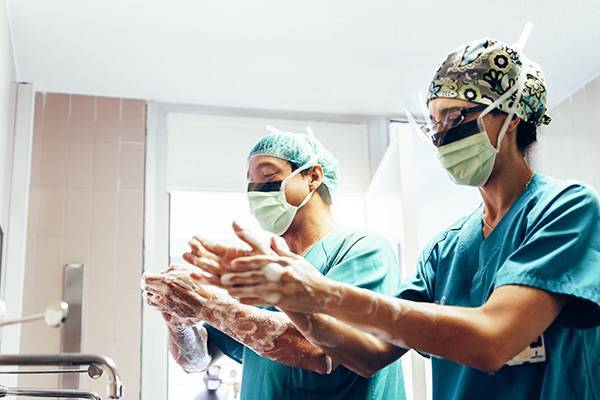
Dental offices keep patients safe from the flu, colds and other illnesses by following a set of standard precautions: cleaning hands before and after every patient, wearing protective gear, heat-sterilizing reusable instruments, disinfecting surfaces between appointments, and keeping the water used during treatment clean. These steps protect every patient at every visit, whether you are coming in for a routine cleaning or an urgent problem.
Many people first noticed these precautions during the COVID-19 pandemic, when masks, screening questions and spaced-out appointments became part of every visit. But most infection control in a dental office happens behind the scenes, and it was in place long before 2020. Here is what that work looks like and what you can ask about at your next appointment.
What is dental office infection control?
Infection control is the set of routines a dental team uses to stop germs from passing between patients, staff and equipment. The Centers for Disease Control and Prevention (CDC) publishes guidelines for dental settings based on standard precautions, which means treating every patient as if they could carry an infection. Because the same steps are used for everyone, no patient has to share their health history in order to be protected.
The core practices include:
- Hand hygiene before and after contact with each patient
- Personal protective equipment such as gloves, masks, eye protection and gowns
- Safe handling of needles and other sharp instruments
- Cleaning and sterilizing reusable instruments
- Disinfecting treatment-room surfaces between patients
- Maintaining the quality of the water used during treatment
How do dentists sterilize instruments?
Not every item in a dental office needs the same treatment. The CDC sorts them by how they are used:
Critical items
These are instruments that go into soft tissue or bone, such as scalers and surgical tools. They carry the highest risk, so they must always be heat sterilized before they are used again.
Semicritical items
These touch the inside of the mouth but do not break the skin, such as mouth mirrors. The CDC recommends heat sterilizing these as well whenever the item can tolerate heat. Dental handpieces (the drills) fall into this group, and the CDC says they should always be heat sterilized between patients, not just wiped down.
Noncritical items
These only touch intact skin, such as the arm of the X-ray machine. They are cleaned and then disinfected with an EPA-registered hospital disinfectant.
The dental sterilization process usually follows the same order: instruments are cleaned to remove debris, packaged, run through a heat sterilizer (often called an autoclave), and kept sealed until they are opened for the next patient. To confirm the sterilizer is working, the CDC recommends testing it with a biological indicator, also called a spore test, at least once a week.
How are treatment rooms disinfected between patients?
After each appointment, surfaces that were touched or exposed during treatment are cleaned and disinfected before the next patient is seated. Many offices also cover hard-to-clean surfaces, such as light handles and chair controls, with disposable barriers that are replaced for every patient. Single-use items, such as many needles, gloves and some suction tips, are thrown away after one use.
Is the water used during dental treatment safe?
The water that sprays from dental equipment runs through narrow tubing where bacteria can build up if it is not maintained. The CDC recommends that water used for routine dental treatment meet the same bacterial standard as drinking water set by the EPA: no more than 500 colony-forming units of bacteria per milliliter. Offices keep their water lines within that limit by following the equipment manufacturer’s cleaning and testing instructions.
What changed after the COVID-19 pandemic?
During the pandemic, dental offices added steps on top of their usual routines, including:
- Making sure staff had their seasonal flu vaccines and asking anyone with flu-like symptoms to stay home
- Asking patients about symptoms before their visit and at check-in
- Spacing appointments further apart to limit contact in the waiting room
- Removing magazines, toys and other items that are hard to disinfect
- Letting patients wait in their cars until the team was ready for them
- Asking patients to come alone unless they needed a companion
Some of these steps have been relaxed since then, and practices vary from office to office. The standard precautions above have not changed: they were in place before the pandemic and remain the foundation of a safe dental visit today.
Is it safe to go to the dentist?
Yes. When a dental office follows standard infection control precautions, routine visits are a safe part of caring for your health. Putting off care can carry its own risks: a small cavity or a mild gum problem can grow into an infection that needs more involved treatment later.
If you feel sick before an appointment, call the office. The team can tell you whether to reschedule or come in, especially if you are dealing with tooth pain.
Questions to ask your dentist about infection control
A good dental office is happy to explain how it keeps patients safe. You can ask:
- How are your instruments cleaned and sterilized between patients?
- How often do you test your sterilizers?
- How do you clean the treatment room before each patient?
- How do you maintain the water lines in your dental chairs?
You can read how our team handles these steps on our sterilization and disinfection procedures page.
When to get dental care right away
Some problems should not wait for a routine appointment, including a knocked-out tooth, a badly broken tooth, or a toothache with swelling or fever, which can be signs of an infection. If you are dealing with one of these, see our emergency dental care page or call us so we can help you as soon as possible.
Frequently asked questions
Do dentists reuse instruments?
Many dental instruments are reusable, but they are cleaned and heat sterilized before they are used on another patient. Items that cannot be sterilized, such as many needles and gloves, are single use and thrown away.
What is an autoclave?
An autoclave is a heat sterilizer that uses pressurized steam to kill bacteria, viruses and spores on instruments. Dental offices test their sterilizers regularly to confirm they are working.
Do dentists still wear masks after COVID-19?
Masks were part of dental infection control before the pandemic and remain standard protective equipment during treatment, along with gloves and eye protection.
Have questions about how we keep our patients safe? Call us or request an appointment with our Dunwoody dental office.