Ozempic Teeth: What Dunwoody Patients Need to Know About GLP-1 Medications and Oral and Dental Health
How Do GLP-1 Medications Such as Ozempic Affect Your Teeth?

By Plunkett & Chaw Dental
If you have been following recent health trends—or perhaps if you have visited your doctor recently—you have likely heard about the revolutionary class of medications known as GLP-1 receptor agonists. Brand names like Ozempic, Wegovy, and Mounjaro have become household terms, helping millions of Americans manage Type 2 diabetes and achieve significant weight loss.
Here in Dunwoody and across the greater Atlanta area, we are seeing many of our own patients experience life-changing results from these medications. At Plunkett & Chaw Dental, we celebrate anything that helps our patients live healthier, longer, and more active lives. However, as holistic healthcare providers, we also know that major changes in your body often ripple out to affect your oral health.
Recently, a new term has been trending on social media and in medical circles: “Ozempic Teeth.”
While this is not a clinical diagnosis you will find in a medical textbook, the symptoms it describes are very real. If you are currently taking a GLP-1 medication or are considering starting one, it is vital to understand how these drugs can impact your teeth and gums—and, most importantly, how to protect your smile while you improve your overall health.
What Are “Ozempic Teeth”?
The term “Ozempic Teeth” refers to a cluster of oral health side effects that some patients experience while taking GLP-1 medications. It is important to clarify that the medication itself does not directly rot teeth or attack enamel. Rather, the side effects of the medication create an environment in the mouth that can make teeth more susceptible to decay, erosion, and gum disease.
The phenomenon is becoming common enough that dentists across the country are taking notice. Patients who have historically had “perfect” checkups are suddenly presenting with new cavities, increased sensitivity, or early signs of gum inflammation.
The good news? This is entirely manageable. You do not need to choose between your general health and your dental health. With the right preventive care and a few adjustments to your daily routine, you can enjoy the benefits of your medication without sacrificing your smile.
The Science: How Weight Loss Medications Affect Your Mouth
To protect your teeth, you first need to understand the mechanism at play. GLP-1 medications work by mimicking a hormone that regulates appetite and blood sugar. While they are incredibly effective at this, they can inadvertently disrupt the delicate balance of your oral microbiome.
Here are the four primary ways these medications impact oral health:
1. Xerostomia (Chronic Dry Mouth)
This is the most significant factor. Many patients on Ozempic or Wegovy report a noticeable decrease in saliva production. Furthermore, because these drugs suppress thirst signals along with hunger signals, many patients simply forget to drink enough water.
Saliva is the unsung hero of oral health. It acts as a natural buffering agent, neutralizing the acids produced by bacteria and washing away food particles. It also contains minerals like calcium and phosphate that help remineralize (repair) your enamel daily. When your mouth is dry, your teeth lose this natural defense system, leaving them vulnerable to acid attacks and rapid decay.
2. Gastrointestinal Distress and Acid Erosion
It is well-documented that nausea, acid reflux, and occasional vomiting are common side effects of GLP-1 medications, especially when a patient first starts taking them or increases their dosage.
Stomach acid is extremely potent—far more acidic than soda or citrus fruit. When this acid enters the mouth (whether through reflux or vomiting), it washes over the teeth and chemically softens the enamel. Over time, this erosion can strip away the protective outer layer of the tooth, leading to:
- Yellowing (as the underlying dentin shows through).
- Thinning or translucent edges on front teeth.
- Heightened sensitivity to hot and cold.
- Increased risk of cavities.
3. Dietary Changes and Nutrient Absorption
These medications are designed to reduce your appetite, which means you are eating less. While this is the goal for weight management, it requires you to be hyper-vigilant about what you are eating. When you consume significantly fewer calories, it becomes harder to get the necessary daily amounts of Calcium, Vitamin D, Vitamin C, and other minerals essential for strong teeth and healthy gums.
Additionally, when patients feel nauseous, they often gravitate toward “comfort foods”—bland carbohydrates like crackers, toast, or sipping on ginger ale. While these foods settle the stomach, they are fermentable carbohydrates that break down into sugar, feeding the bacteria that cause cavities.
4. Changes in Oral Hygiene Habits
Let’s be honest: when you feel nauseous or fatigued, your bedtime routine is often the first thing to suffer. We have spoken with patients who, due to morning sickness or general malaise from their medication, find themselves skipping flossing or rushing through brushing. Unfortunately, this happens exactly when the mouth is most vulnerable due to the dry environment mentioned above.
Signs You Should Watch For
As your partners in health, Dr. Lee Plunkett and Dr. Janice Chaw want you to be proactive. You shouldn’t wait for a toothache to address these issues. If you are taking a GLP-1 medication, keep an eye out for these early warning signs:
- Sticky or Stringy Saliva: A sign that you aren’t producing enough fluid to keep the mouth clean.
- Difficulty Tasting or Swallowing: This often indicates severe dry mouth.
- Bleeding Gums: If your gums bleed when you floss, it is not “normal”—it is a sign of gingivitis (inflammation) which can progress faster in a dry mouth.
- New Sensitivity: A sudden “zing” when you drink ice water or hot coffee can indicate enamel erosion.
- Bad Breath (Halitosis): Chronic bad breath that doesn’t go away after brushing is often a sign of dry mouth or underlying decay.
Your Action Plan: Protecting Your Smile
If you are on this health journey, we are here to support you. You can absolutely maintain a sparkling, healthy smile while taking these medications. Here is the protocol we recommend for our Dunwoody patients:
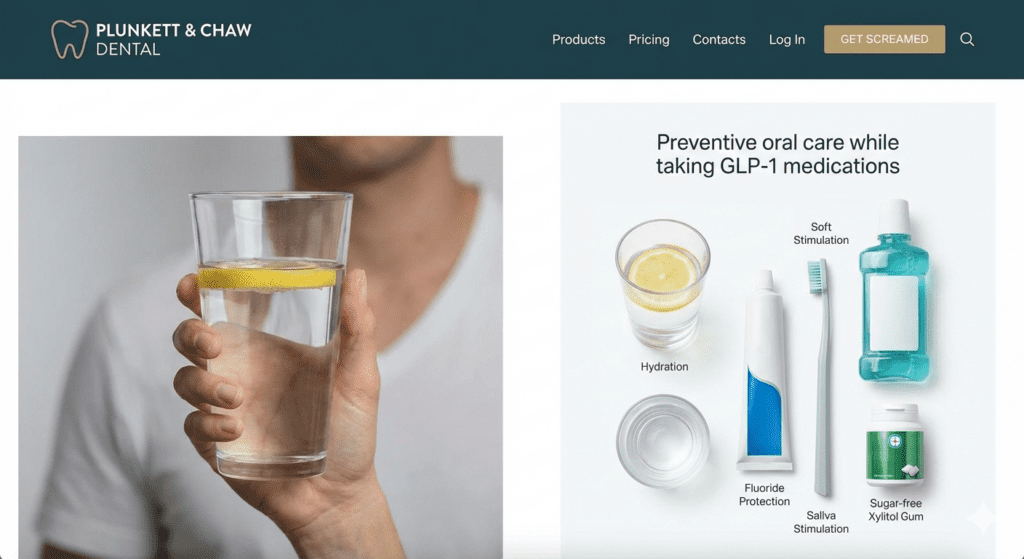
Step 1: Hydrate Like It’s Your Job
Because your thirst signal may be suppressed, you cannot rely on feeling thirsty to tell you when to drink.
- Goal: Aim for 80–100 ounces of water a day.
- Strategy: Carry a water bottle everywhere. Take small sips constantly rather than chugging large amounts at once; this keeps the oral tissues moist.
- Boost: If water isn’t cutting it, consider using over-the-counter saliva substitutes (like Biotene) or chewing sugar-free gum containing Xylitol. Xylitol is a natural sweetener that stimulates saliva flow and actually helps fight cavity-causing bacteria.
Step 2: The “Reflux” Rule
If you experience acid reflux or vomiting, do NOT brush your teeth immediately.
This is a common mistake. After exposure to stomach acid, your enamel is soft and vulnerable. Scrubbing it with a toothbrush at that moment can actually brush the enamel away.
- Instead: Rinse your mouth vigorously with water or a mixture of water and a teaspoon of baking soda. The baking soda will neutralize the acid. Wait at least 30 to 60 minutes before brushing to allow your saliva to re-harden the enamel.
Step 3: Upgrade Your Home Care
With the increased risk of decay, your standard routine might need a boost.
- Fluoride is Key: Ensure you are using a fluoride toothpaste. You might also benefit from a fluoride mouth rinse (alcohol-free, so it doesn’t dry you out) to help remineralize “soft spots” before they become cavities.
- Floss Daily: With less saliva to wash away food, flossing becomes non-negotiable to prevent gum disease.
Step 4: Communicate with Us!
This is perhaps the most critical step. Please tell us if you are taking Ozempic, Wegovy, Mounjaro, or any similar medication.
We are not here to judge your medical choices; we are here to tailor your dental care to your current needs. When we know you are on these medications, we can:
- Monitor your enamel density more closely.
- Prescribe high-concentration fluoride toothpaste (like Prevident) if we see early signs of demineralization.
- Apply dental sealants to protect vulnerable grooves in your molars.
Do You Need More Frequent Cleanings?
For many of our patients on GLP-1 medications, the standard “every six months” cleaning schedule may not be enough. If you are struggling with dry mouth or rapid plaque buildup, Dr. Plunkett or Dr. Chaw may recommend seeing us every 3 or 4 months instead.
These interim visits allow us to remove tartar that you can’t brush away at home and catch any developing issues while they are still small, simple, and inexpensive to fix.
The Plunkett & Chaw Promise
At Plunkett & Chaw Dental, we pride ourselves on being more than just a place to get your teeth cleaned. We are a family-oriented practice that cares about you as a whole person.
Dr. Lee Plunkett has been serving families in Dunwoody since 1978, and Dr. Janice Chaw brings a wealth of experience in public health and compassionate care. We combine “old school” personal attention—where we actually listen to you and follow up personally—with the latest advancements in dental medicine.
We understand that taking control of your weight and diabetes is a massive, positive step for your future. We want to ensure that when you reach your health goals, you have a strong, beautiful, and functional smile to match your new level of confidence.
Schedule Your Preventive Visit Today
Whether you are just starting your medication or have been on it for months, now is the perfect time for a dental check-in. Do not wait for sensitivity or pain to arise.
Contact our Dunwoody office today at (770) 452-0222 to schedule your appointment.
Let’s work together to keep your smile healthy for a lifetime.
Frequently Asked Questions About GLP-1 Medications and Your Teeth
Q: Does Ozempic actually ruin your teeth?
Q: Why do I have such a dry mouth while taking Wegovy or Mounjaro?
Q: What is "Ozempic Breath" and how do I get rid of it?
- Hydrate constantly to wash away bacteria.
- Scrape your tongue daily to remove biofilm.
- Floss every day.
- Chew sugar-free gum to keep saliva moving.
- Visit Dr. Plunkett or Dr. Chaw to rule out cavities or gum disease as the cause.
Q: Can I brush my teeth right after throwing up?
Q: Do I really need to tell my dentist I’m taking weight loss medication?
Q: Are my teeth becoming more sensitive because of my medication?
Disclaimer: This blog post is for informational purposes only and does not constitute medical advice. Always consult with your physician regarding your medications and your dentist regarding your specific oral health needs.